
Spumoni Taipei
泡泡餐酒館
C-25-001
2026.02
Completed
Designer: Ray Liang, Gary Tsai
Location: Taipei, Taiwan
Photography: Studio VWP
2026
TINTA 金邸獎 - 入圍
Taiwan Interior New Talent Award - Finalist
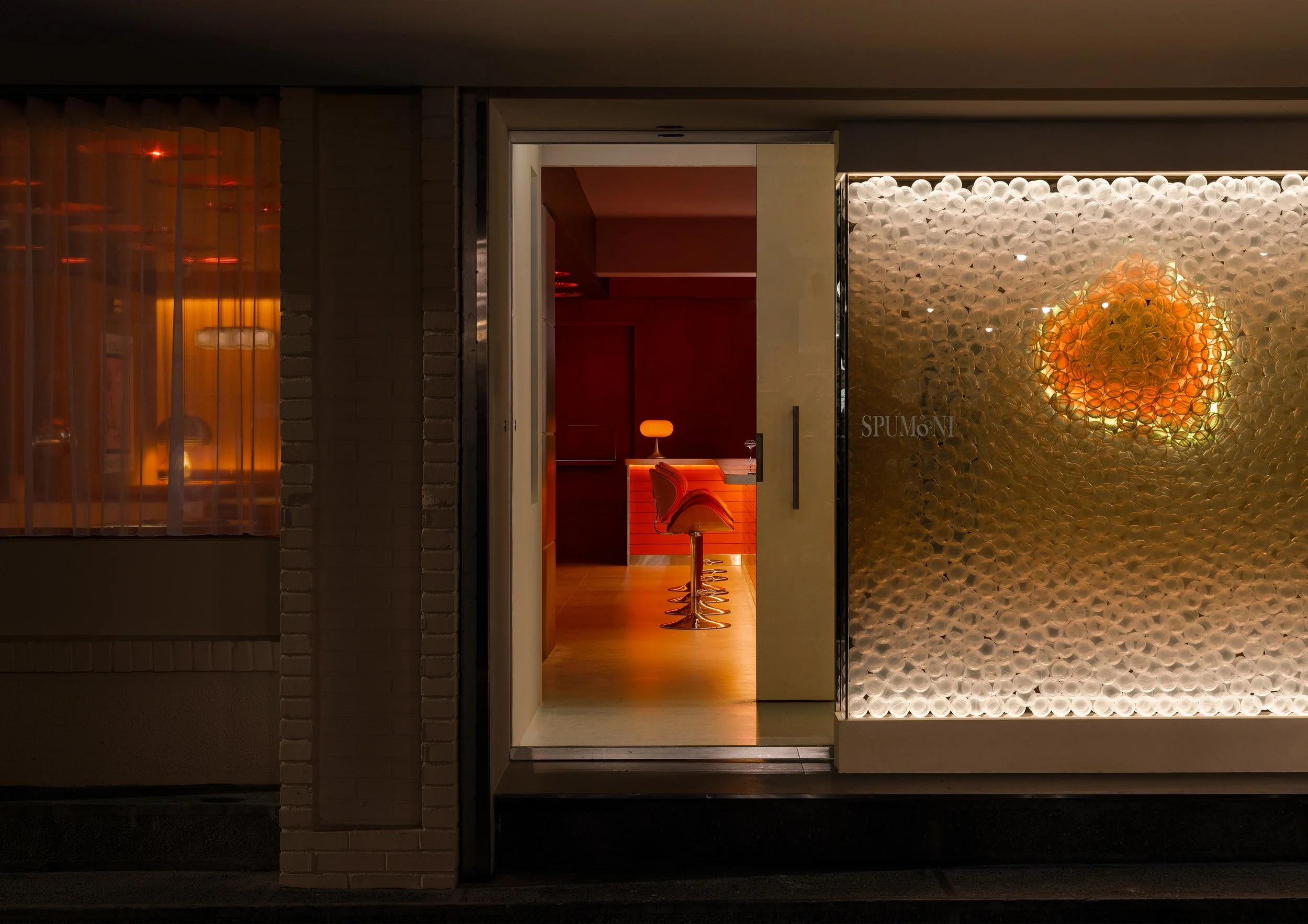
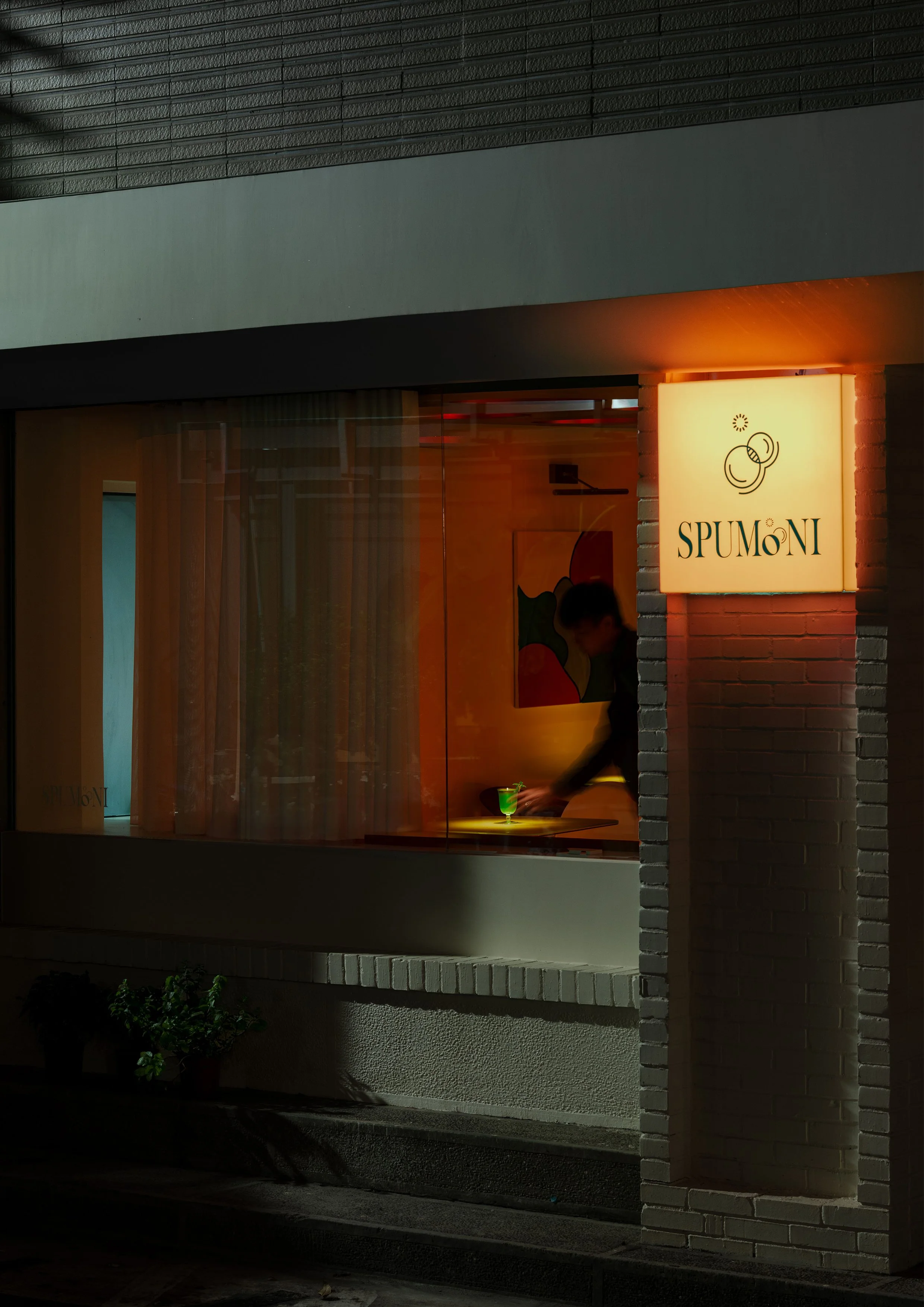
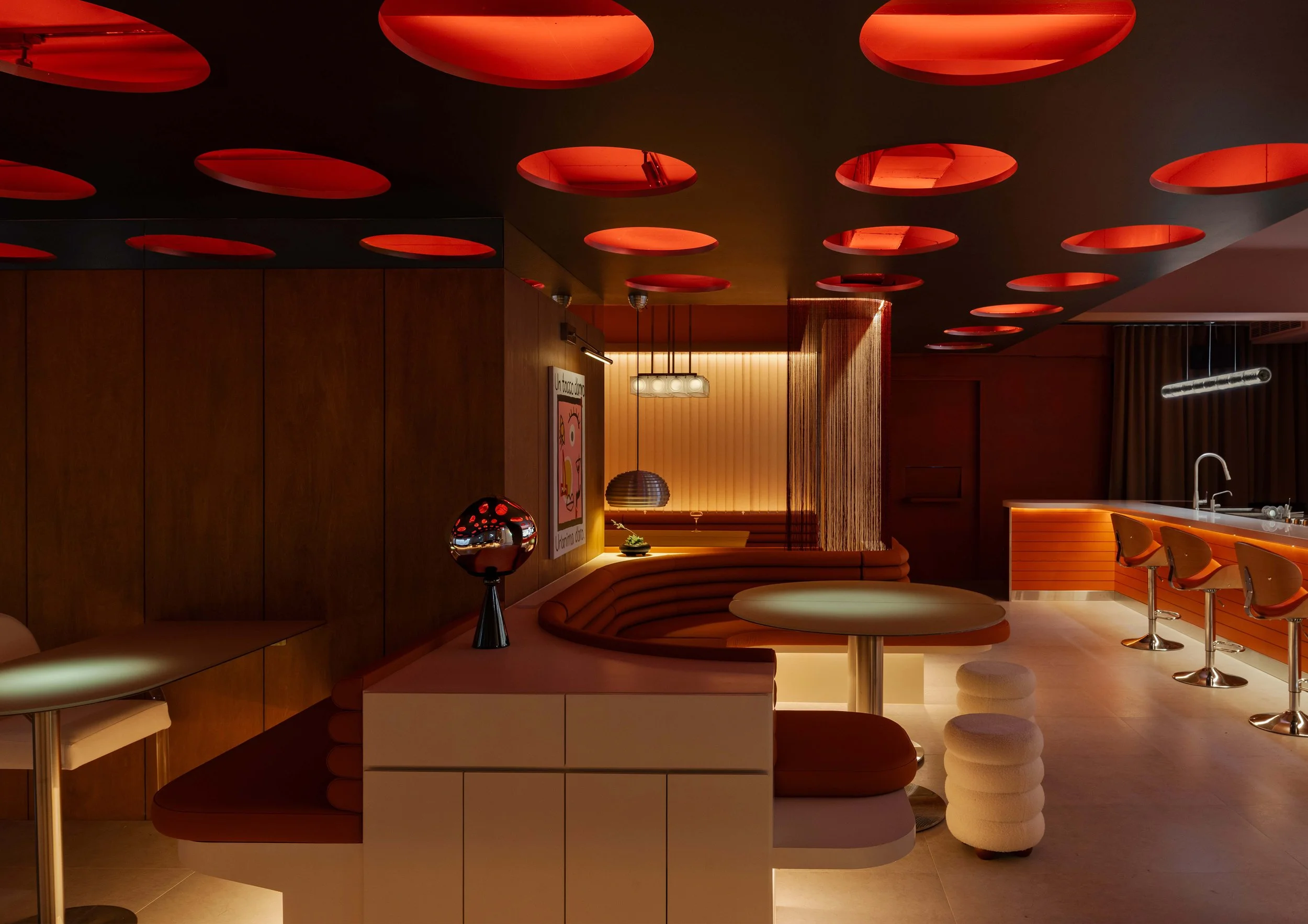
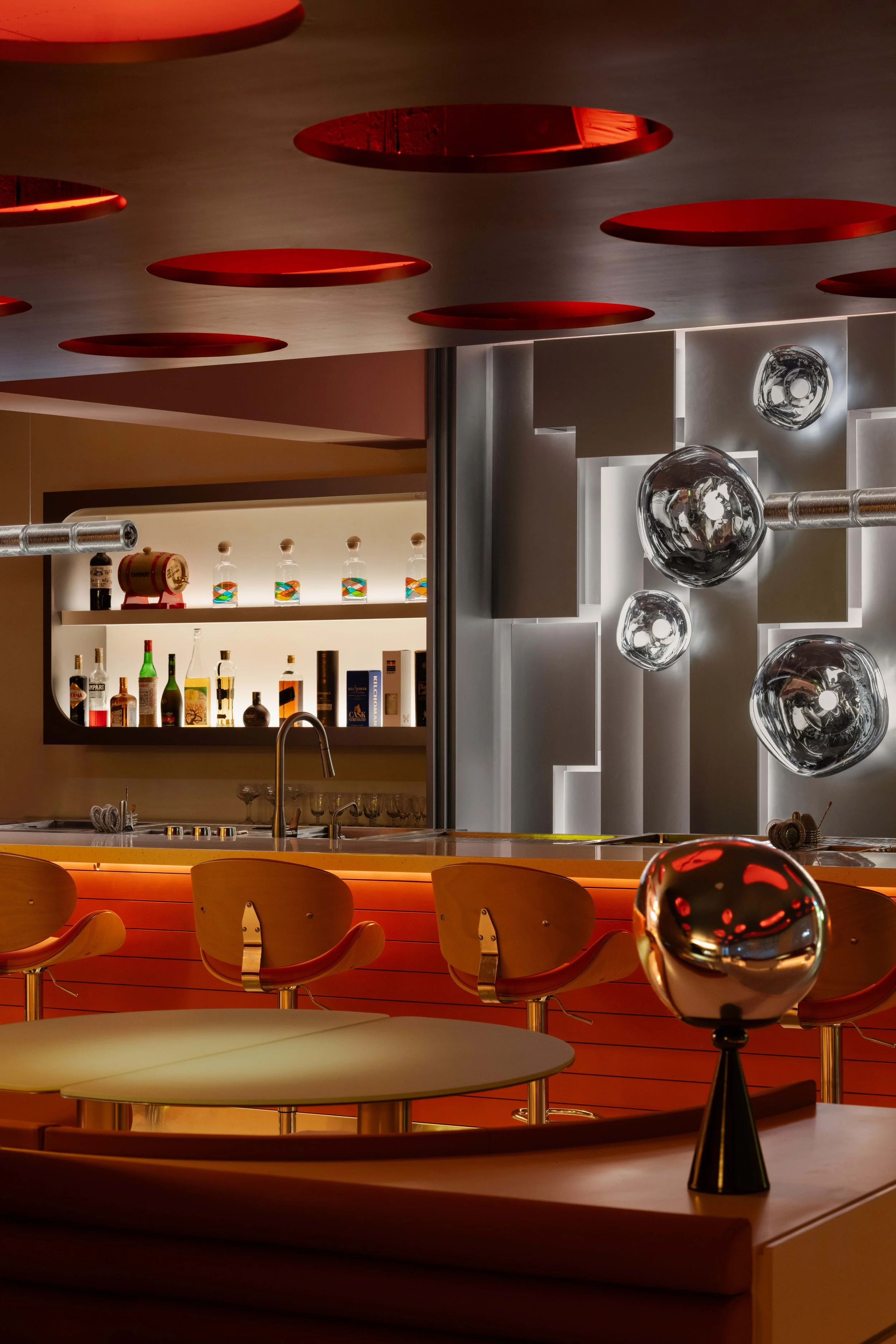
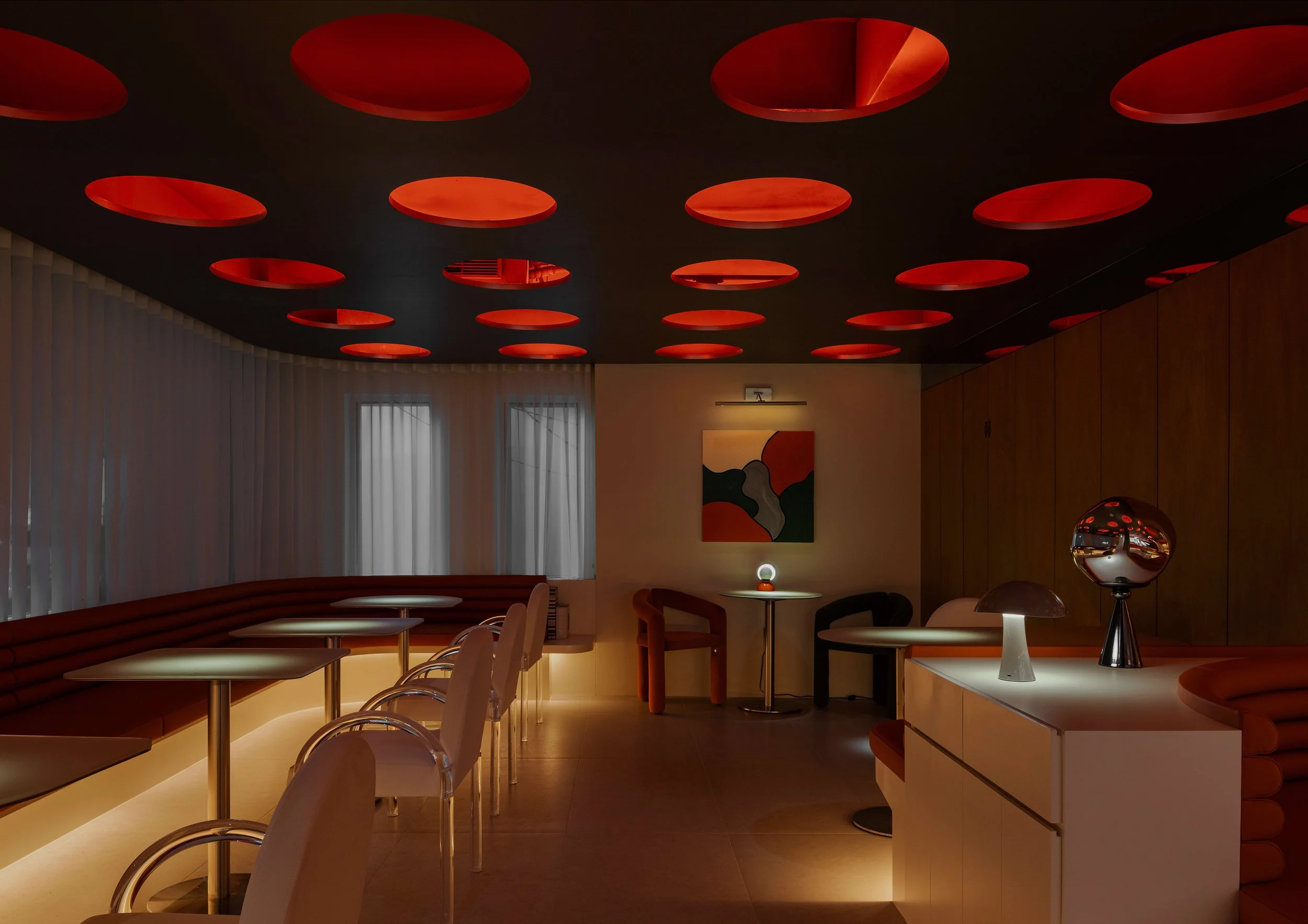
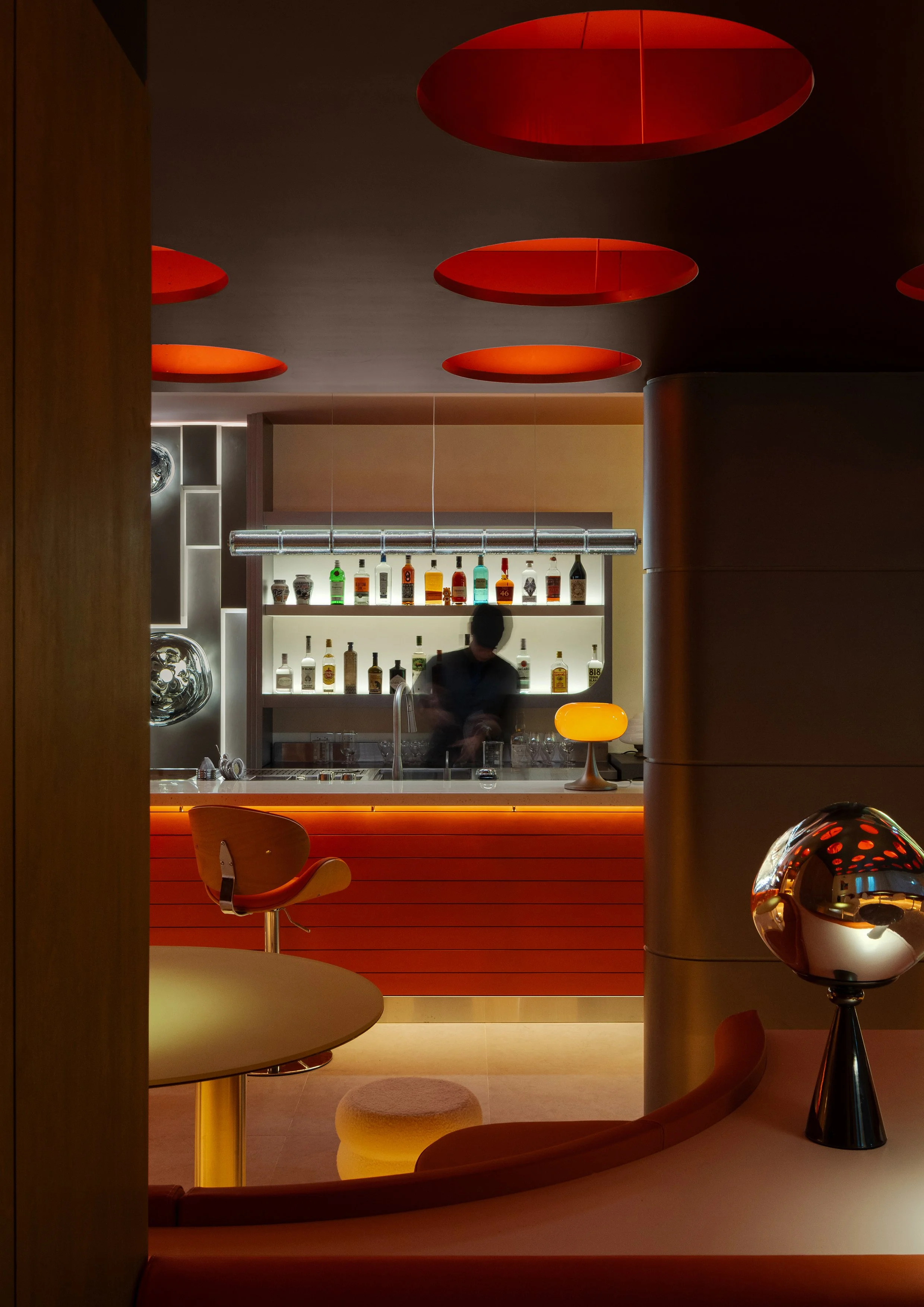
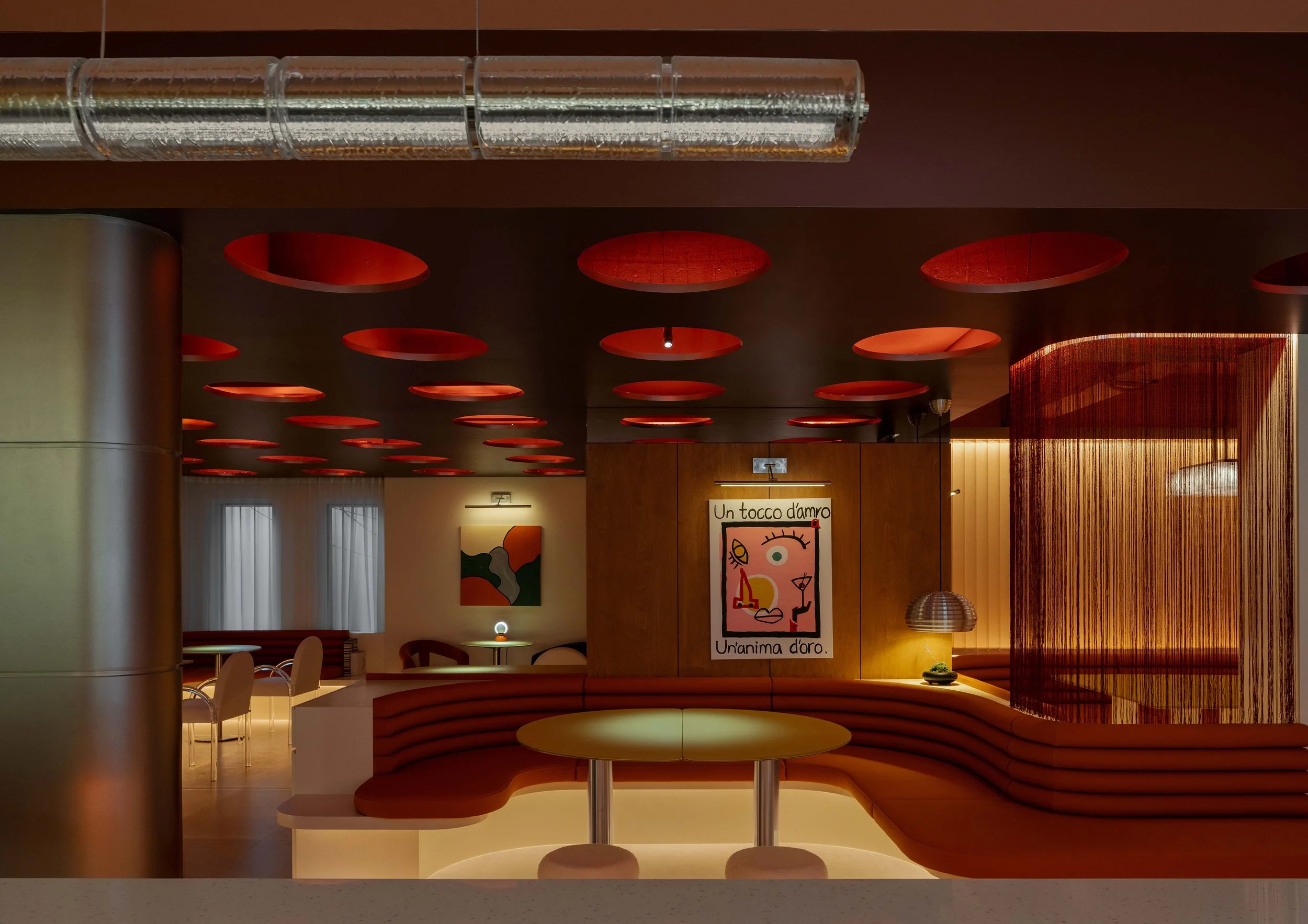
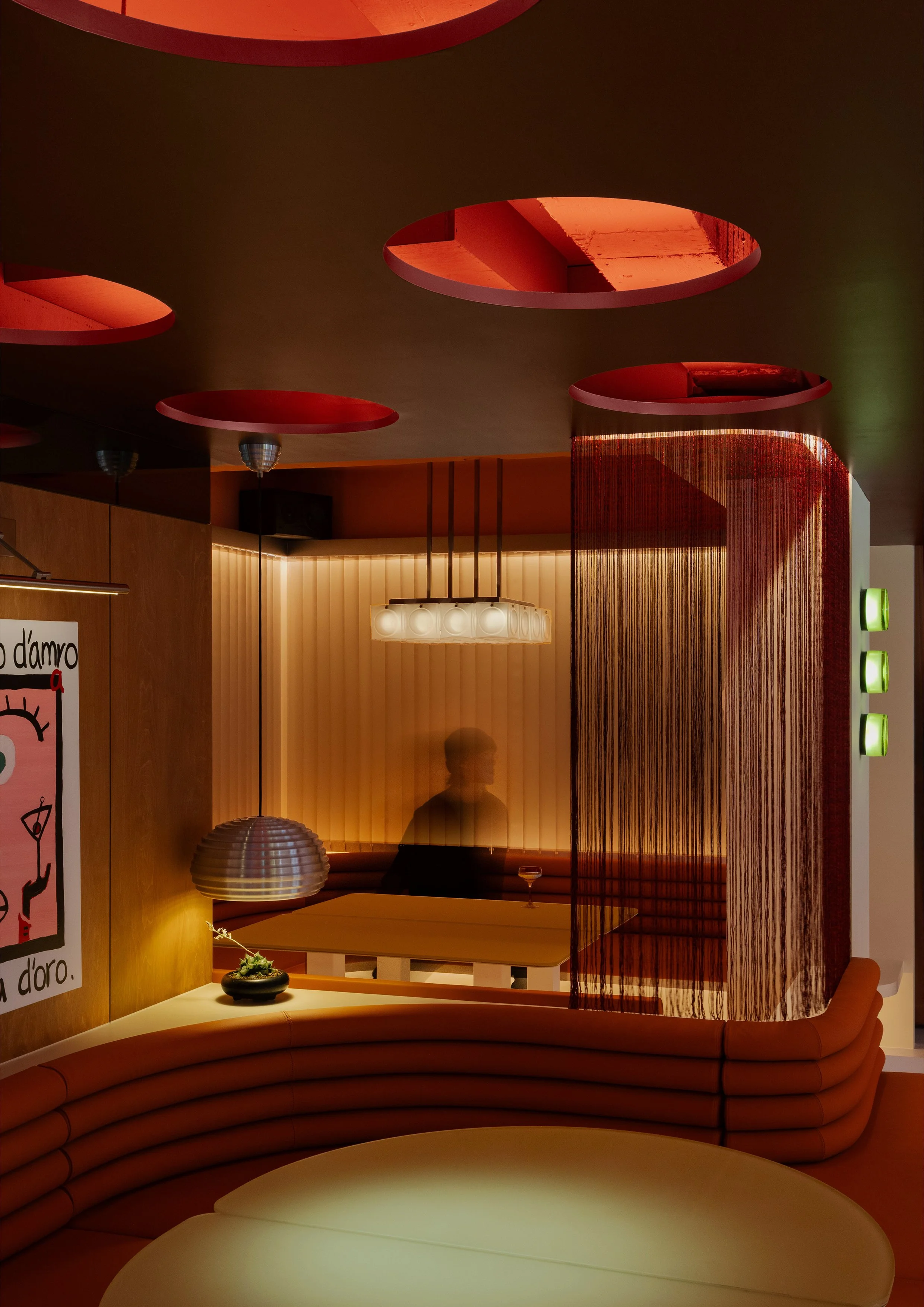
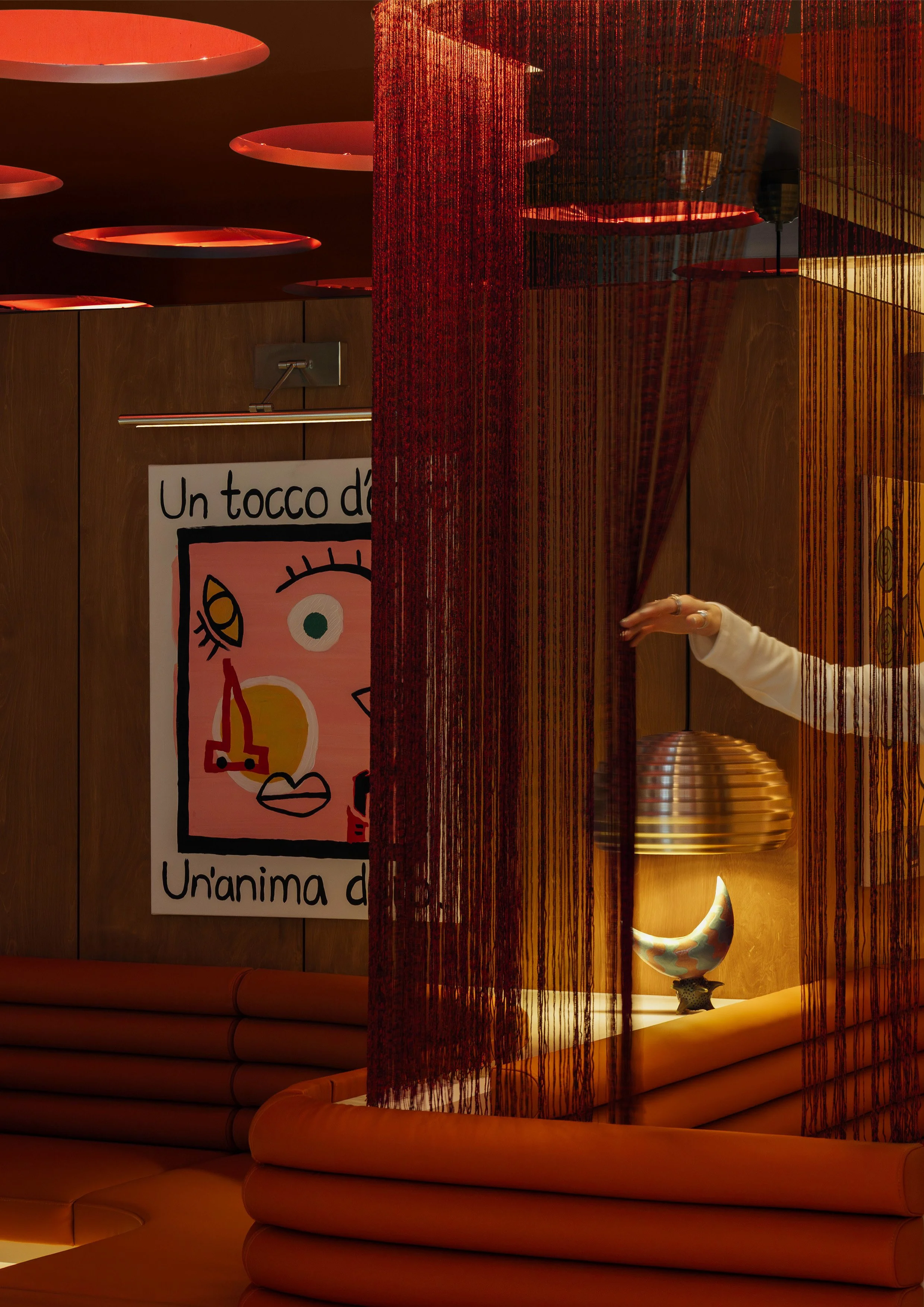
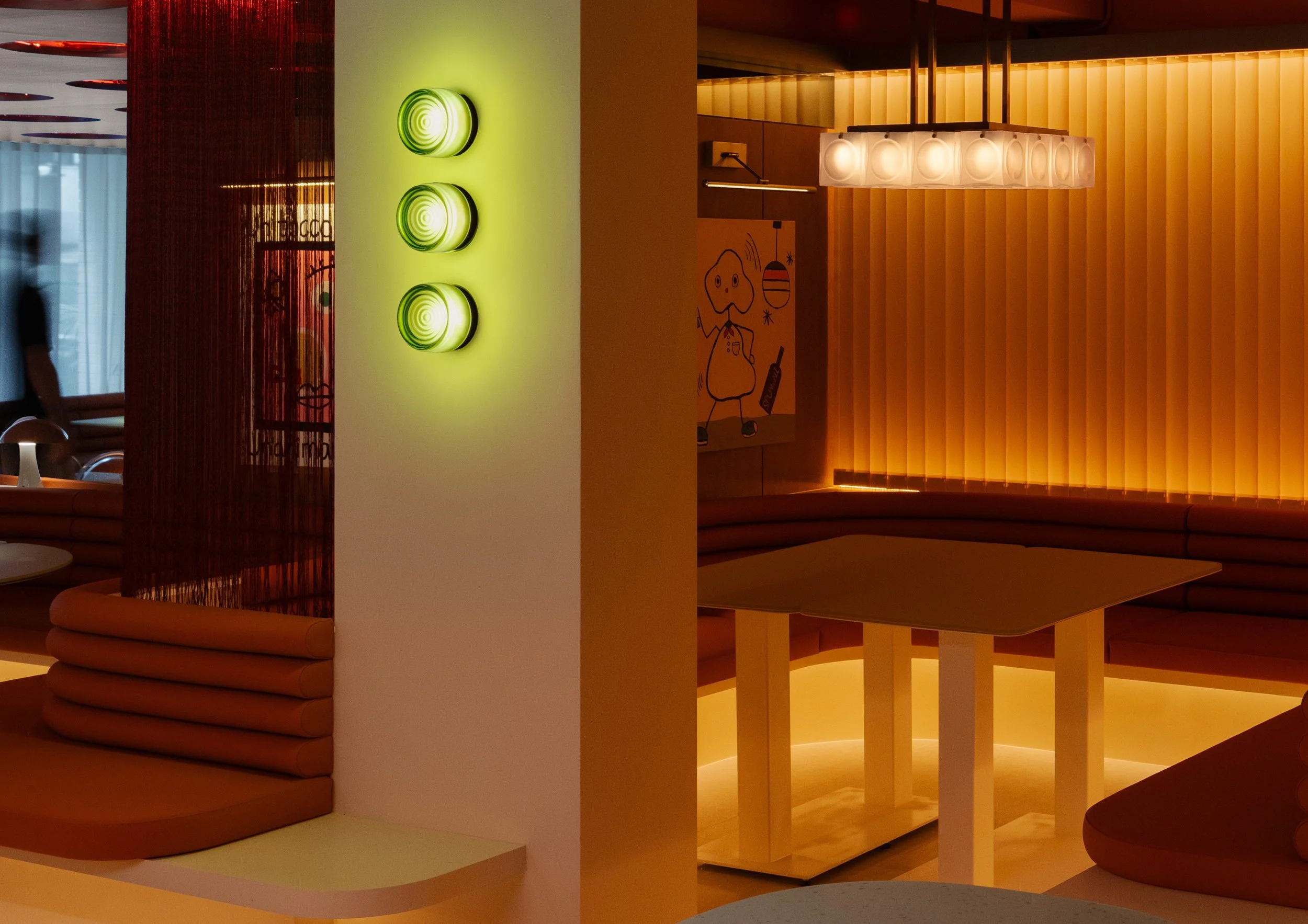
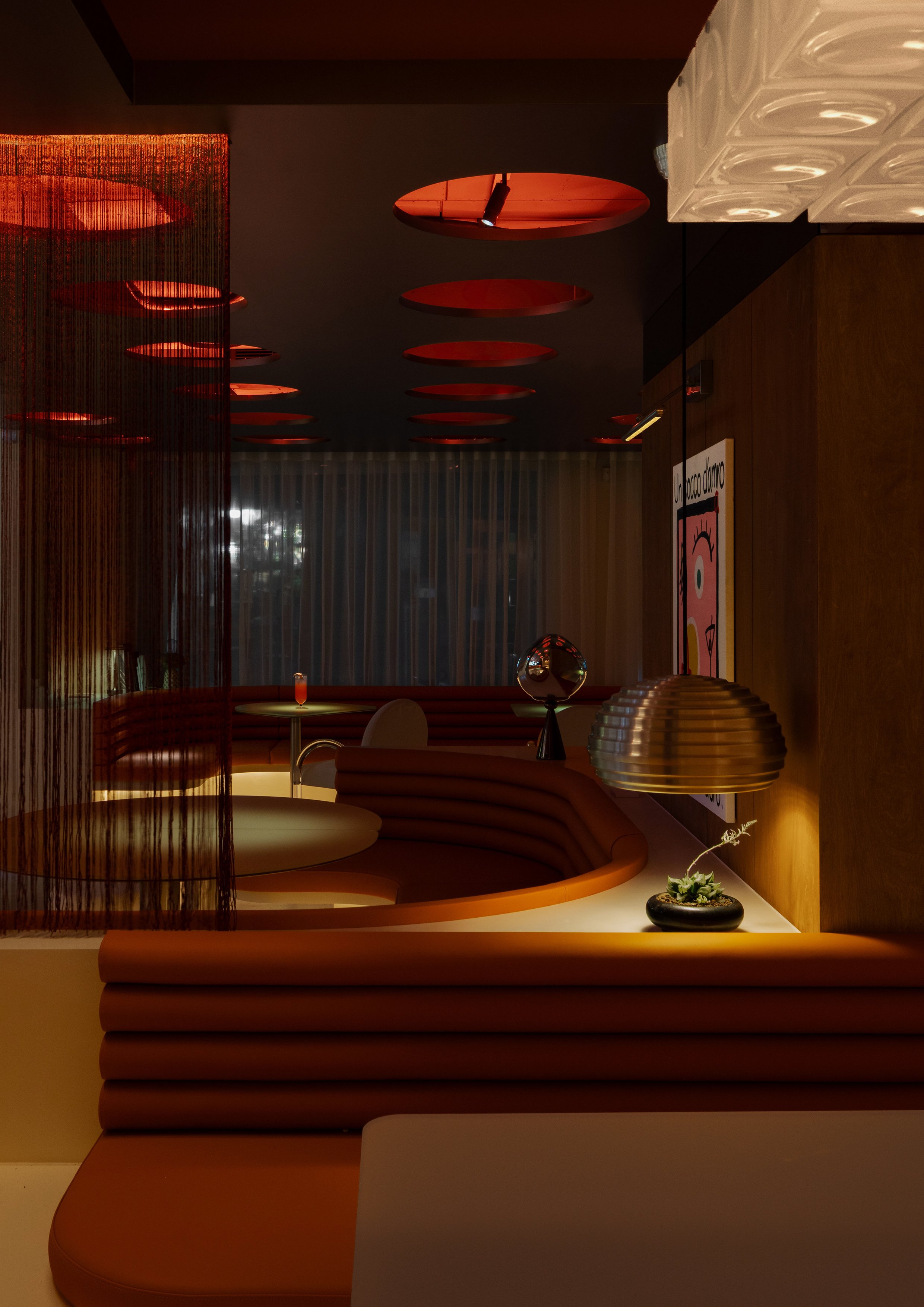
本案以經典調酒 Spumoni 為名,擷取其基酒 Campari 標誌性的橘紅為主色調,將調酒獨有的「苦甜韻味」映射於空間氛圍。橘紅微光如同都市夕照,在靜謐深夜中營造出溫柔的包覆感。
Spumoni 在義大利語中意為泡泡。入口處以無數透光球體堆疊出細碎的光影,定格氣泡升騰的瞬間,構築出一道情緒邊界,過濾了都市的雜訊與喧囂也作為進入室內前的心境暗示。室內捨棄生硬的區域劃分,以柔和弧線與圓形幾何轉譯氣泡的輕盈。天花板的圓形開孔以上升的氣泡為靈感,呼應酒液表層的粼粼波光,同時消解了低天花帶來的壓迫感。弧形卡座上方的垂墜織品與燈光的交織,如同一層朦朧的濾鏡,塑造在光影流轉間形塑出連續且通透視覺層次。在喧囂擁擠的城市裡暫時放緩步伐,感受這份輕盈、流動且私密的微醺氛圍。
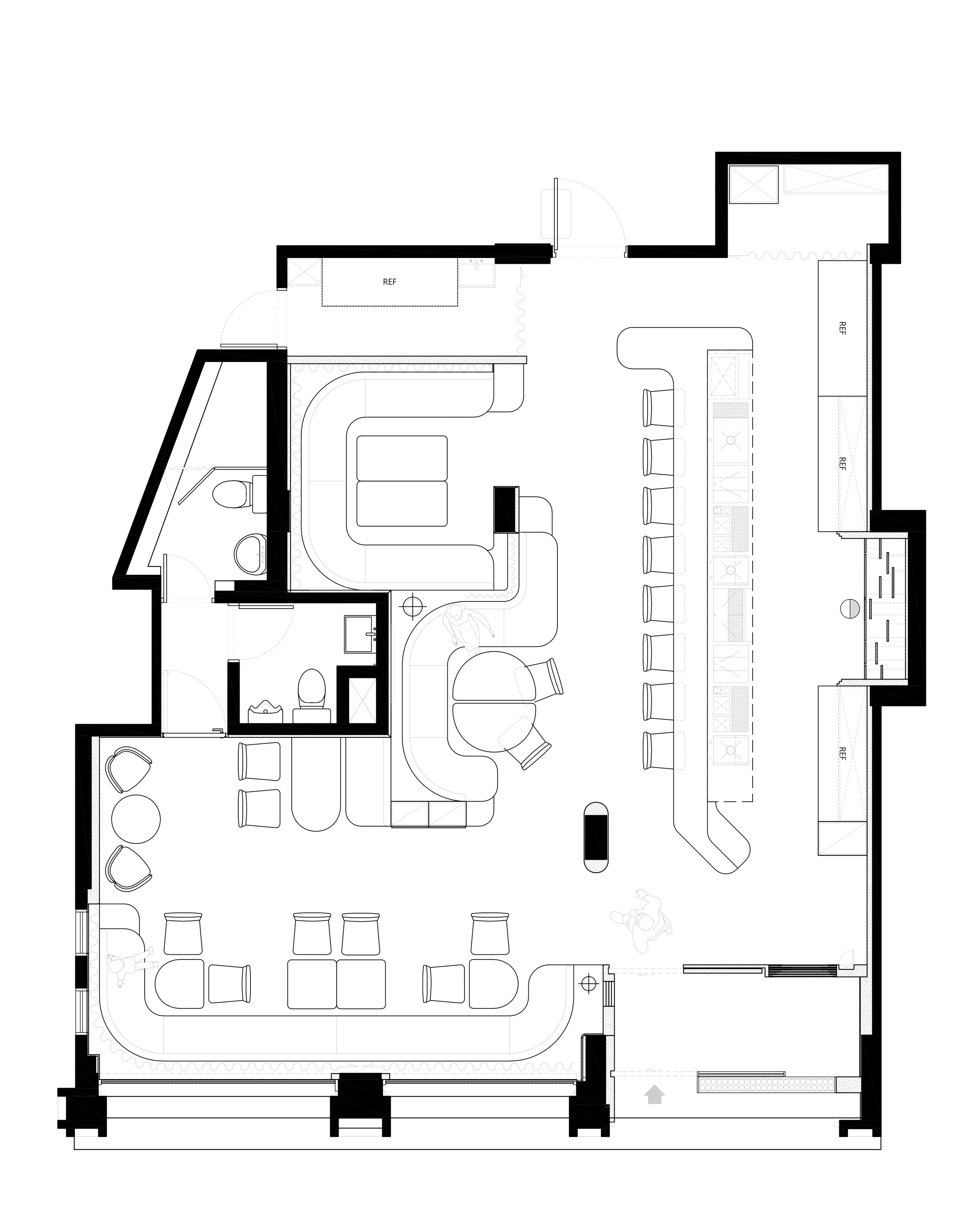
Floor Plan
Named after the classic cocktail, Spumoni translates the bittersweet flavor profile of Campari and orange into a visceral spatial experience. The project extracts the iconic amber-crimson as its primary palette, evoking an "urban sunset" that fosters a sense of gentle envelopment amidst the city's nocturnal rhythm. In Italian, spumoni means "bubbles"—a core motif that informs the project’s fluid geometries and creates a visual extension of flavor through light and shadow.
The project involved the transformation of a 15-year-old bar characterized by a fragmented layout. To improve social cohesion while respecting a strict budget, the design retains the original bar’s location to minimize plumbing costs. In place of rigid partitions, curved lounge seating creates a continuous landscape that encourages natural movement, transforming a cluttered plan into a fluid social environment.
Technical requirements dictated the interior's volume. To meet the necessary acoustic insulation standards, the ceiling depth was increased, resulting in a height of 275 cm that drops to a restrictive 240 cm beneath the beams. To mitigate spatial oppression, the team introduced recessed circular apertures. Inspired by ascending effervescence, these "voids" echo the shimmering surface of spirits while providing a psychological sense of verticality, effectively "lifting" the overhead plane through light and form.
This design logic culminates at the entrance, where an "Emotional Threshold" is created using thousands of translucent plastic ocean balls. These spheres act as a light-filtering screen, freezing the ephemeral moment of rising bubbles to define a psychological boundary. The installation filters urban clamor into a delicate play of shadows, signaling a transition from the street to the interior sanctuary.
Ultimately, through the interplay of suspended drapery and string curtains acting as a hazy filter, Spumoni invites guests to decelerate and immerse themselves in a light, fluid, and intimate atmosphere of sensory deceleration.